James J. Reeb Memorial Lectures
Origins of the James J. Reeb Memorial Lectures
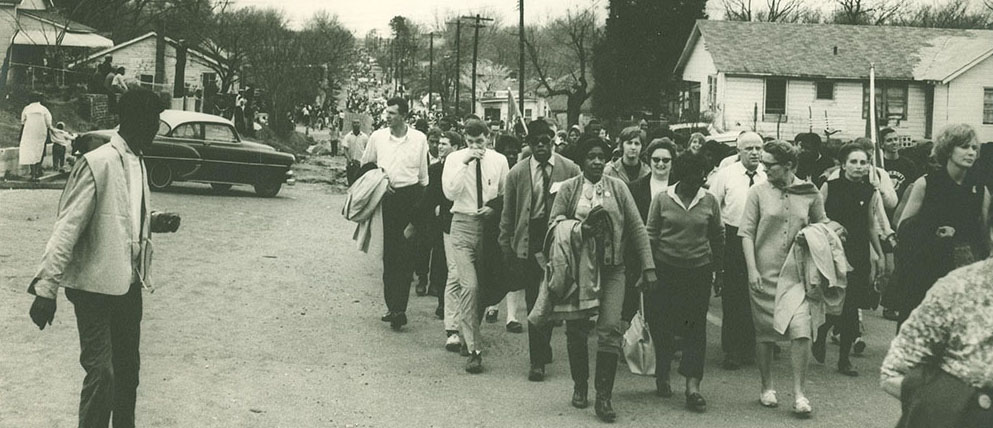
On Sunday, March 7, 1965, 600 people participated in the historic civil rights march from Selma to Montgomery, Alabama. Organized by the Southern Christian Leadership Conference as part of a national campaign to pass the Voting Rights Act, the march used peaceful protest to draw attention to restrictions on African American voters. Marchers covered only six blocks before local and state police attacked them with clubs and teargas. A second march took place two days later, which James J. Reeb, a graduate of Princeton Theological Seminary and Unitarian Universalist minister, joined. When it was over, three people had been killed in the Alabama marches: Jimmie Lee Jackson, shot while protecting his grandmother from troopers with billy clubs; Violet Liuzzo, shot while transporting marchers in her car; and Reeb, beaten to death for eating in a black-owned restaurant.
One year later the Seminary held a service and installed a plaque on campus in Reeb’s memory. It also held a series of five annual lectures by internationally distinguished religious and civic leaders. How do these lectures, given 50 years ago, inform current social justice efforts among persons of faith?
Invoking the name of James Reeb means thinking about race/racism in the U.S. To my mind, the word racism (and its cognates) is tossed about with insufficient nonchalance as to be almost worthless. By it I mean a conscious or unconscious de-valuing of the lives, experiences, culture, or thought of a group – in this country, typically of any non-white groups.
About James J. Reeb
Just as the civil rights movement encompasses more than one night in Selma, so does James Reeb’s faith journey extend beyond any one moment. Both narratives are complex, bound in personal struggles, historical realities, and societal change.
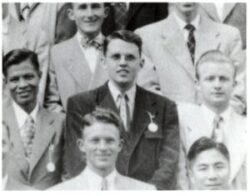
James Joseph Reeb was born in Wichita, Kansas, New Years Day 1927. His mother was Roman Catholic and his father German Lutheran. The family moved to Casper, Wyoming, where Harry Reeb worked in manufacturing and James attended high school. After graduating, he served in the US Army from 1945 to 1946 and attended St. Olaf College, graduating in 1950. While in college, he participated in the Missionary Study Group. He married Marie Deason and they had four children.
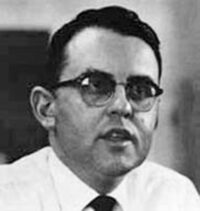
The GI Bill enabled James Reeb to attend graduate school, and he applied to Princeton Theological Seminary. In his application he wrote:
Just before leaving high school I made my decision to enter the ministry and was taken under care of Presbytery. Since that time I have never been without the conviction that I must carry the news of salvation to men.
Reeb’s biographer and employer Duncan Howlett wrote that Reeb experienced a theological awakening in his time at Princeton Seminary. During the spring term of his first year he visited the East Harlem Protestant Parish as part of a course on city churches. The trip to New York exposed him to urban poverty and racial disparities and the church’s efforts to combat them. He grew restless at Princeton. Earlier fundamentalist views from home and college were shaken and he began to have doubts about personal beliefs and denominational tenets.
A successful college student, he was frustrated in seminary classes and did average work despite assurances from advisors that religious doubt was common among seminary middlers. During his second year he began fieldwork at the Philadelphia General Hospital chaplaincy program and was increasingly drawn to community ministries and psychiatry. After graduation from Princeton in 1953 he was ordained at the First Presbyterian Church in Casper. He was hired as chaplain at PGH and worked there from 1953 to 1957.
In 1956 he discovered Unitarianism through reading Sophia Fahs’ book, Today’s Children and Yesterday’s Heritage. After exploring the Ethical Culture Society and Society of Friends, he decided he had found his spiritual home in the Unitarian Church. He resigned from his chaplaincy position at Philadelphia General Hospital July 1957 and became youth director of the Philadelphia West Branch YMCA where he worked until 1959. He became assistant, then associate, minister of All Souls’ Unitarian Church in Washington DC, where he worked until 1964 when he became Community Relations Director of the Boston Metropolitan Housing Program of the American Friends Service Committee.
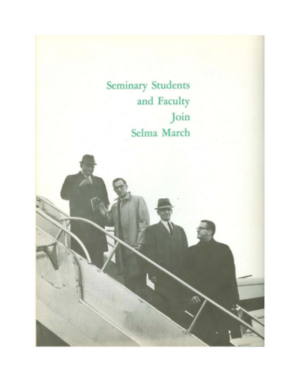
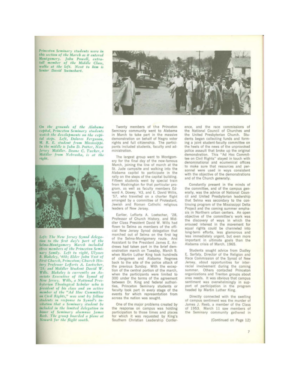
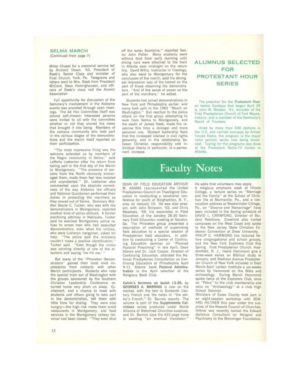
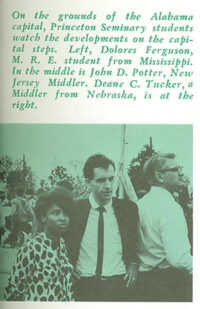
In March 1965, leaders from the Southern Christian Leadership Conference and the Student Non-Violent Coordinating Committee organized peaceful demonstrations to bring national attention to the disenfranchisement of African American voters. Twenty members of the Princeton Seminary community joined the protest marches in Selma, Alabama. Participants included students, faculty and administration, all of whom were involved in every stage of the coordinated events. After police violently attacked demonstrators on March 7, students collected funds and formed a joint student-faculty “Ad Hoc Committee on Civil Rights” that kept the movement alive on campus.
Reeb saw the violence in Selma on television and responded to Martin Luther King Jr.’s call for clergy to join a second march two days later. After that march he and two other ministers who had participated ate dinner in an integrated restaurant nearby. When they left the restaurant they were attacked by four white men, one of whom hit Reeb on the head with a heavy club. He died two days later.
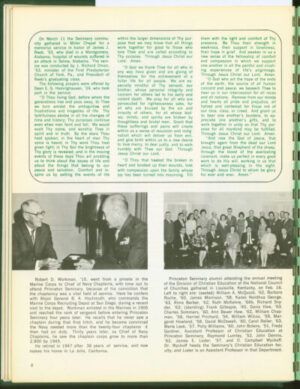
Seminary Dean and Professor of Christian Education E. G. Homrighausen led a memorial service for Reeb in Miller Chapel. In the Seminary Alumni News that spring President James I. McCord wrote:
All of us are more deeply committed and more deeply involved because of the example of James Reeb, ’53, and the way he sealed his own dedication with his life. That human rights is the great moral issue of our time cannot be gainsaid, and all of us, faculty, students, and alumni, are challenged to bring the reconciling ministry of Jesus Christ to bear on this problem wherever it exists at home or abroad.
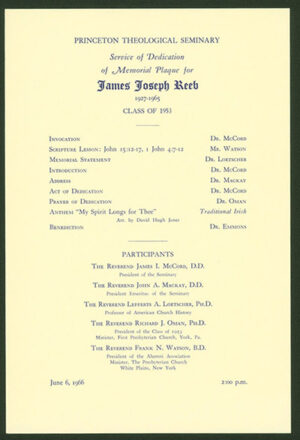
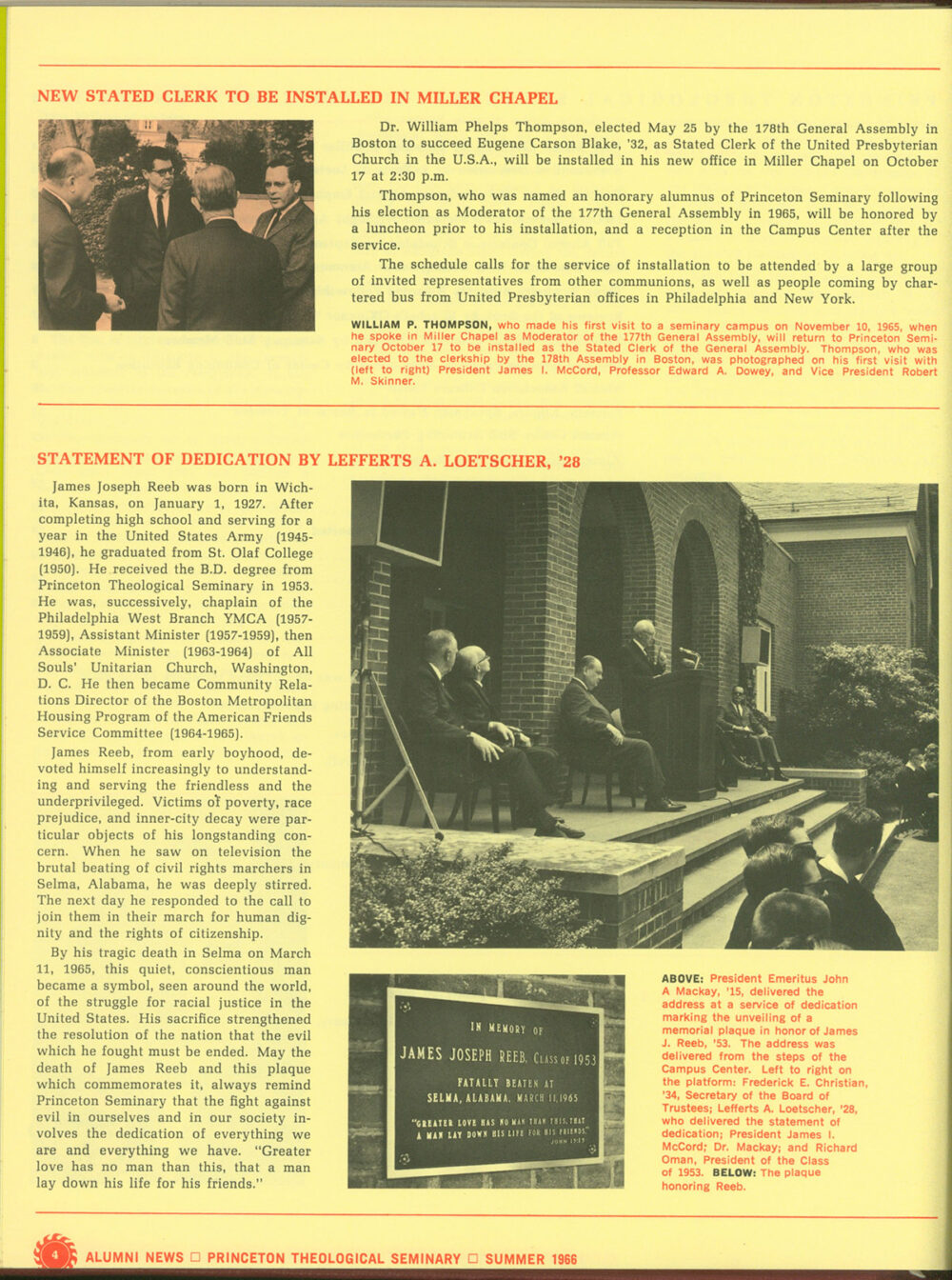
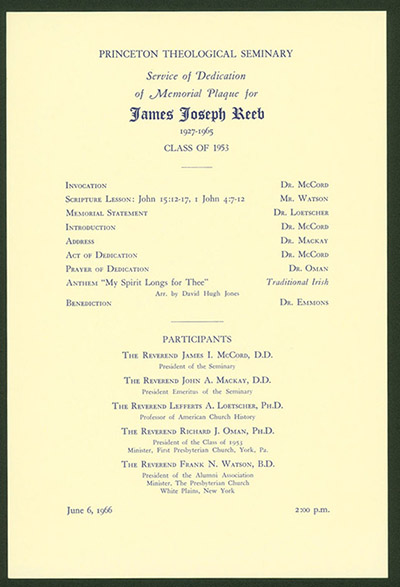
The Seminary Board of Trustees, in cooperation with the Alumni Council, then established the James J. Reeb Memorial Lectureship, with Eugene Carson Blake to deliver the first lecture. On Alumni Day, June 6, 1966, a plaque in Reeb’s memory was placed at the Mackay Campus Center during a dedication service on campus. Richard J. Oman, President of the Class of 1953, led a prayer of dedication. PTS Professor of American Church History Lefferts A. Loetscher gave a statement of dedication in which he said, “By his tragic death in Selma on March 11, 1965, this quiet, conscientious man became a symbol, seen around the world, of the struggle for racial justice in the United States.”
John A. Mackay, who was Seminary president when Reeb attended Princeton, also spoke at the dedication. James H. Moorhead wrote that Mackay “expressed both great admiration and a sad reservation about Reeb.” (Moorhead, 413)
Richard J. Oman returned to PTS in 1995 as Vice President for Academic Affairs at Pittsburgh Theological Seminary to preach at a service commemorating the thirtieth anniversary of Reeb’s death:
How important it is that you and I reexamine the fundamental tenets of our faith on a continuing basis, for truth is never static. Jim Reeb believed this, and although his conclusions were not mine, I learned from his life the importance of the search. … Surely a second lesson to be gleaned from the James Reeb story is that the practice of ministry calls for decision.
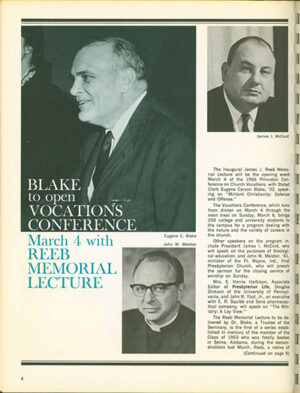
The First James Reeb Memorial Lecture – Eugene Carson Blake
Invoking the 19th century hymn, “Onward Christian Soldiers,” Eugene Carson Blake urged those at the first Reeb Memorial Lecture to adopt a “militant Christian faith,”
to defend what is good and cherish it, to attack what is evil and destroy it. Such faith gives meaning to human life and hope to a revolutionary and changing world.
How do his words resonate among global religious movements of the 21st century?
Larger than life in his physical and ecclesiastical stature, Blake spoke directly to the role he believed Protestant Christians were called to take in confronting societal challenges of the 20th century. His lecture, “Militant Christianity—Defense and Offense,” (audio recording also available) mirrored his ministry.
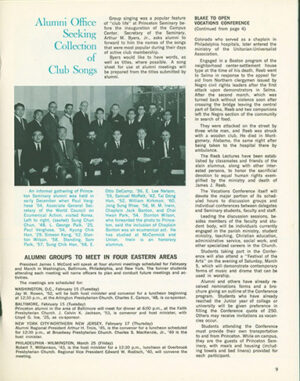
Eugene Carson Blake was born Nov. 7, 1906, in St. Louis in a conservative Presbyterian family. His father was a steel industry employee and a Presbyterian elder. Blake attended public schools and later the Lawrenceville School in Lawrenceville, N.J., where Thornton Wilder was one of his teachers. In 1928 he was graduated with honors in philosophy from Princeton University, where he played guard on the varsity football team. He married Valina Gillespie, who died in 1973. They had no children. He later married Jean Ware.
After college, Blake pursued graduate study at New College, Edinburgh, Scotland, and taught at Forman Christian college in Lahore, India. He returned to the United States and attended Princeton Theological Seminary, receiving a Bachelor of Theology degree in 1932. Paul A. Crow Jr. wrote that Blake, “forged for himself a biblical realism that gave solid theological foundations and moral relevance to one who was to lead the church in an era of turbulence and change.”
During the 1930s Blake served pastorates in New York City and Albany. In 1940 at age 34 Blake was called to be minister of Pasadena Presbyterian Church, one of the largest Presbyterian congregations in the United States, with 3,500 members. During his pastorate membership grew to 4,500, and Blake became a national church leader. In 1951 he became stated clerk of the United Presbyterian Church in the USA (until 1958 the Presbyterian Church in the USA), the denomination’s highest position, which he held for three successive terms until 1966.
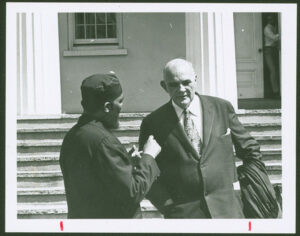
Blake was a delegate to the 16th, 17th, and 18th General Councils of the World Presbyterian Alliance in 1948, 1954, and 1959. He was president of the National Council of Churches from 1954 to 1957. During that time, at the height of the Cold War and McCarthyism he led a church delegation to the Soviet Union for ten days as guests of the Russian Church. He was a delegate to the Second and Third Assemblies of the World Council of Churches held in 1954 in Evanston, Ill., and 1961 in New Delhi, India. In 1960 he preached at Grace Cathedral in San Francisco for a union of Presbyterian, Episcopal, and Methodist Churches with the United Church of Christ, a stand that led to creation of the Consultation on Church Union in 1962.
Eugene Carson Blake was remembered as a “Christian diplomat” who used his international positions to advance church unity and social justice. He served as WCC general secretary from 1966-1972 and helped launch the WCC’s Programme to Combat Racism. In July 1963 he was arrested along with other clergy who tried to integrate an all-white amusement park in Maryland. Upon his arrest he said, “I would not know whether the law is constitutional. All I know is that it is not right.”
The following month he joined the March on Washington, speaking at the Lincoln Memorial. With other civil rights leaders, including Martin Luther King, Jr., John Lewis, and Whitney Young, he met at the White House with President John F. Kennedy and Vice President Lyndon Johnson. President Johnson asked Blake to lead formation of an interfaith lobby that helped secure passage of the 1964 Civil Rights Act. The Johnson Administration would later declare him “unacceptable to the White House as a religious representative” for his protest against the Vietnam War and American foreign policy. In his 1966 Reeb lecture, Blake said,
To follow Jesus Christ is not to be a romantic idealist, but to believe despite the sin of man, realistically observed, that men may be converted by the power of God. To be a Christian is to believe that with God the battle may be won in this world now and in eternity.
Over the course of his ministry Blake received eight honorary doctorates from such institutions as Occidental College, Princeton University and University of Pittsburgh. He was a trustee of Princeton Seminary from 1954 on, of which one colleague wrote, “His pride in and love for Princeton Theological Seminary were lyrical.” Upon retirement he was a leader in Bread for the World, the Christian anti-hunger organization. A Princeton Seminary Bulletin eulogy referenced Blake’s words at the Lincoln Memorial:
Only as a rhetorical device could he have claimed he came with those white clergy who were late in bringing their support for racial justice. In this as in all the social causes where he so deeply felt called to serve Christ and His Church, Gene Blake was never late in his life.
Eugene Carson Blake died in 1985 at age 78.
The Second James Reeb Memorial Lecture – Roy Wilkins
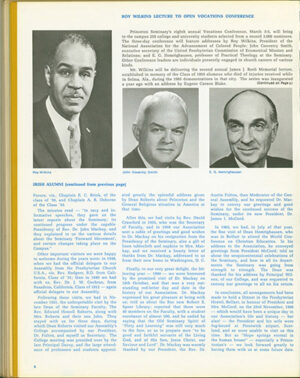
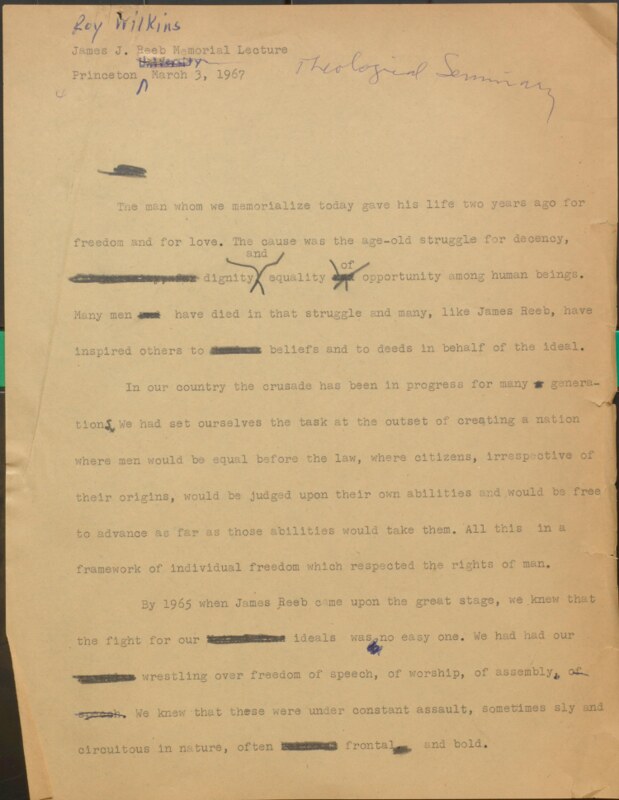
Roy Wilkins gave the second James Reeb Memorial Lecture (Part 1, Part 2), “Life Given: For Freedom and For Love,” March 3, 1967, almost 50 years ago. His message of perseverance could have been delivered today.
We prayed that the senseless killing of this good man would make the battle of Selma the last battle for freedom, but even as we prayed we remembered how many, down through the ages, had died for man’s forward inching and we knew in our hearts that after Reeb there would be more, many more, before the kingdom came.
Roy Wilkins was born August 30, 1901, in St. Louis, the son of William DeWitte Wilkins, a minister, and Mayfield Edmundson. His parents were from Holly Springs, Mississippi, but fled when racial violence threatened his father. After his mother died in 1907, Wilkins, his sister and brother lived with their aunt and uncle, a sleeping-car porter, in a low-income integrated neighborhood of St. Paul, Minnesota. Growing up, Roy Wilkins had many white classmates, neighbors, and friends.
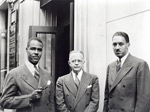
Wilkins studied sociology at the University of Minnesota where he supported himself working as a redcap, a dining-car waiter, and a slaughterhouse laborer. He also studied journalism, and was the only African American staff member of the campus newspaper, the Minnesota Daily. He was also editor of the St. Paul Appeal, an African-American newspaper. After graduating in 1923, Wilkins worked at the Northwestern Bulletin and became news editor of the Kansas City Call, a black weekly. He and social worker Aminda Badeau married in 1929. Living in Kansas City, Wilkins acutely experienced disparities between white and black neighborhoods and joined the civil rights movement.
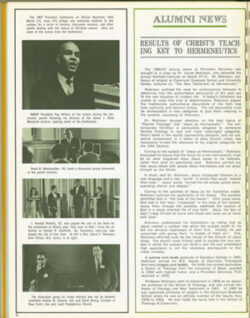
In 1931 Walter White was executive secretary of the NAACP, the nation’s oldest and largest grassroots civil rights organization. He recruited Wilkins to be assistant secretary, beginning a 24-year apprenticeship between the two men. In 1934, Wilkins followed W. E. B. Du Bois as editor of Crisis, the organization’s official magazine. During the 1940s, the NAACP and Wilkins played a key role in national struggles against job discrimination, racial violence, and segregation in the armed forces. Fair employment practices became a high priority, and he chaired the National Emergency Civil Rights Mobilization, which in 1950 organized a mass rally in Washington.
That mobilization led to Wilkins, A. Philip Randolph of the Brotherhood of Sleeping Car Porters, and Arnold Aronson of the National Jewish Community Relations Advisory Council founding the Leadership Conference on Civil Rights, a powerful civil rights lobbying coalition. A driving force in the organization, Wilkins successfully pushed major civil rights bills through Congress in the 1950s and 1960s.
In 1955 after White died, Wilkins became executive secretary (later executive director) of the NAACP. Under his early leadership, the organization saw one of its greatest achievements, the 1954 Supreme Court decision in Brown v. Board of Education. He and NAACP lobbyist Clarence Mitchell worked with President Lyndon B. Johnson to secure passage of the civil rights acts of 1964, 1965, and 1968. In 1967, the year of his Reeb lecture, Wilkins was awarded the Presidential Medal of Freedom by Johnson.
A savvy advocate and negotiator, Wilkins sought reform legislatively, testifying before Congress and meeting with Presidents Kennedy, Johnson, Nixon, Ford, and Carter. His approach is remembered as being more careful than other early African American civil rights leaders. In her biography of him, Yvonne Ryan writes that Wilkins was “more comfortable walking the corridors of power than demonstrating on sidewalks.” He sought change via nonviolent legislative means rather than militant demonstrations. That said, he was a visible and active leader in key civil rights moments, including the 1963 March on Washington, the Selma to Montgomery marches in 1965, and the 1966 March Against Fear. During his later years at the NAACP he faced challenges within the organization from younger activists promoting more radical methods and externally amidst the conservative eras of the Nixon and Ford presidential administrations.
He retired from the NAACP in 1977 at age 76 after 46 years and was succeeded by Benjamin Hooks. Roy Wilkins died in New York City in 1981. The Roy Wilkins Centre for Human Relations and Human Justice was established in the University of Minnesota’s Humphrey Institute of Public Affairs in 1992.
Like other Reeb lecturers, Wilkins placed the tragedy of Reeb’s death within the context of the larger fight for freedom. He spoke at Princeton four days after the car bombing death of Wharlest Jackson, a married factory worker, father and treasurer of the Natchez NAACP. Jackson died after working overtime when his pickup truck was bombed in an attempt to kill him and George Metcalfe, a former Natchez NAACP president and voter registration organizer. Of the bombing, Wilkins said,
What a fiendish and dastardly and cowardly obstruction to the unending crusade for freedom! And how futile! The march to the voting booths in Selma was not stopped by the brutal murderers of James Reeb and the march to better jobs, better families and better education for children in Natchez will not be stopped by the ghastly murder of Wharlest Jackson and the cruel maiming of George Metcalfe.
Roy Wilkins – Reeb Memorial Lecture
Hover over the photo and use the arrows to browse the gallery
The Third James Reeb Memorial Lecture – D. T. Niles
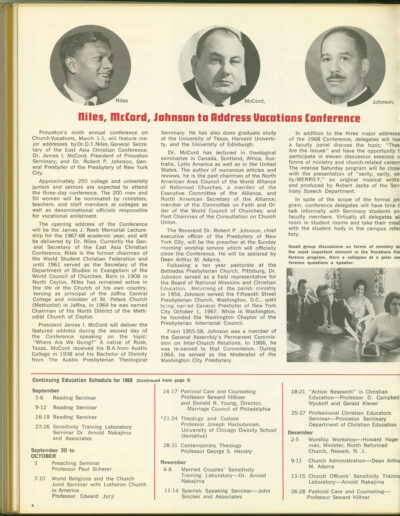
For many in 20th century ecumenism, D.T. Niles embodied oikoumene – unity and engagement – in his cultural and religious heritage, global leadership, and personal life. His greatest legacy may emerge from his preaching. Lacy reminds us it was Niles who said, “Evangelism is witness. It is one beggar telling another beggar where to get food.” Through often deceptively simple stories Niles posed provocative challenges to fellow Christians and evangelists worldwide. In the third James Reeb Memorial Lecture, “Travailing for a New World,” (audio recording also available) delivered March 1, 1968, Niles urged listeners to overcome divisions and conflicts that continued three years after Reeb’s death.
Jesus was crucified not only in James Reeb but in the man who wielded the club – not only in those two men, but in the total society and the total nation. It is everybody’s guilt that conspired together. There is a sense of helplessness, a sense of tragedy, a sense of anxiety because there is nothing you can do. Of course, there is something you can do. There is a great deal you can do.
Daniel Thambyrajah Niles was born May 4, 1908, in Tellipalli, Jaffna, Sri Lanka. His mother died when he was one year old. Of Ceylon Tamil descent, Niles lived with his grandparents until he went to school. His grandfather, the Rev. Daniel Poor Niles was an early indigenous leader of the Methodist Church in Sri Lanka and a respected educator. Niles’ father was a lawyer and active Methodist lay leader who participated in Sri Lankan independence movements of the 1920s and 1930s. The elder Niles wanted his son to become a lawyer as well, but D.T., who was preaching by age 13, trained for the ministry. He attended Jaffna Central College and went on to United Theological College, Bangalore, India, where he received his bachelor of divinity degree in 1933 with first class honors. He earned his doctorate from the University of London.
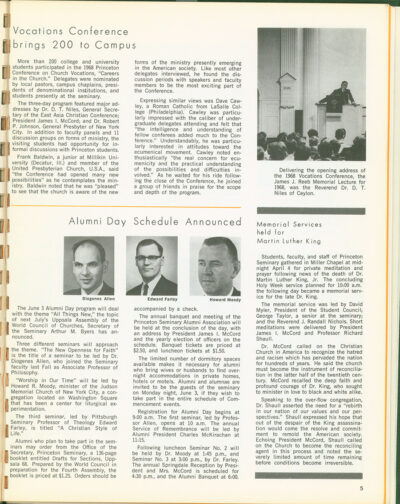
Niles participated in the Student Christian Movement, an early factor in modern ecumenism. In 1938 he addressed the World Missionary Conference of the International Missionary Council at Tambaram at age 30. A key event in ecumenism and the theology of missions, Tambaram demonstrated the strength in numbers and message of so-called younger Asia churches. Niles was a leading participant. He opens his Reeb lecture with a recollection of Tambram.
In the early 20th century, Asian nationalism campaigns were developing alongside indigenous church movements in response to a privileged social and economic status of Christian missionaries. Niles’ ministry, rooted in early Methodist missionary traditions of pietism, evangelism, and social concern, builds on those traditions to address changes in Sri Lanka and elsewhere. His theology is “the outcome of a process of action and reflection.” (Furtado)
Political and social changes post World War II plus the emergence of the Church of South India in 1947 gave rise to a new era of autonomous younger churches. A visible leader in the movement, Niles drew from Karl Barth’s writings on dialectical theology. Guided by his mentor W.A. Visser ‘t Hooft, general secretary of the World’s Student Christian Federation, Niles sought to find common ground and basis for social action among Christians and other faith communities. Eulogizing him, Visser ‘t Hooft said, “He became a missionary to six continents and to all sorts and conditions of people.”
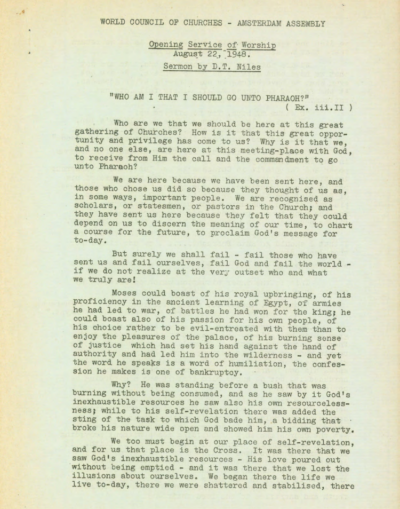
Niles delivered the keynote address at the 1948 founding of the World Council of Churches and became the first chairman of the WCC Youth Department. He also served as executive secretary of the Council’s Department of Evangelism. He held pastorates throughout Sri Lanka and married Dulcie Solomons. They had two sons who became ministers.
People will come together not just around creeds; they come together also around commitments. In the whole civil rights struggle, people of different ways of thinking have come together around a common commitment.
Niles preached at the opening service of the July 1968 Fourth Assembly of the WCC in Uppsala, Sweden after Martin Luther King Jr., who had been invited to preach, was assassinated that spring.
An architect of the Church Union movement in Sri Lanka, Niles was general secretary of the National Christian Council of Ceylon and chairman of the World’s Student Christian Federation. He was chairman of the East Asian Christian Conference and a president of the WCC when he died in 1970. His book Reading the Bible Today has been translated into fifteen languages including Chinese and Arabic.
SPACE
D. T. Niles – Reeb Memorial Lecture
Hover over the photo and use the arrows to browse the gallery

The Fourth James Reeb Memorial Lecture – Ralph David Abernathy
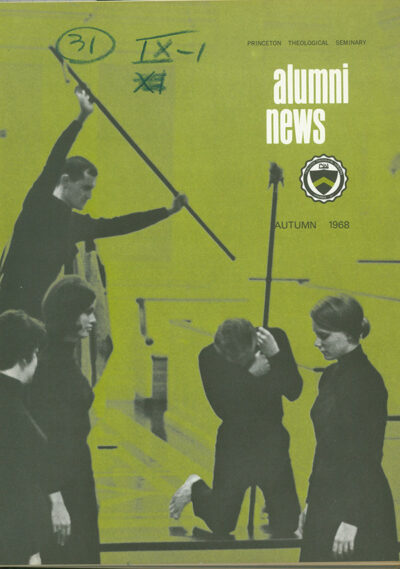
Ralph Abernathy delivered the fourth James Reeb Memorial Lecture (audio recording also available) December 9, 1968, eight months after his close friend and colleague, Martin Luther King, Jr., was assassinated. King’s “spiritual right-hand man,” and chief aide, Abernathy had taken King’s place as president of the Southern Christian Leadership Conference. The nation was reeling from demonstrations and backlash.
If you have a sense of despair tonight about the possibility of meaningful reform in America and the prospects for a decent world society, I ask you to think of James Reeb. There was despair in 1965, too, but the undeniable urgency of the right to vote was so compelling that people went to Selma regardless of the risk and the odds against victory.
Ralph David Abernathy was born tenth of twelve children in Linden, Alabama, March 11, 1926. His parents were sharecroppers who rose to own a five hundred-acre farm. Abernathy’s father was deacon in a local church, and the younger Abernathy considered the ministry from an early age. After military service at the end of World War II, he returned to Alabama and was ordained a Baptist minister in 1948. He received a bachelor’s degree in mathematics from Alabama State University in 1950. His career in political activism began in college where he led demonstrations to protest poor campus living conditions. He earned a master’s degree in sociology from Atlanta University in 1951. He married Juanita Odessa Jones and they had three children.
Abernathy became pastor of the First Baptist Church in Montgomery, Alabama, in 1951. When Martin Luther King Jr. became pastor of neighboring Dexter Avenue Baptist Church, in 1954, the two men began a friendship and collaboration that continued until King’s assassination. They helped found the Montgomery Improvement Association, which grew out of the Montgomery bus boycott of 1955-1956. King and Abernathy played key roles in the boycott, and Abernathy succeeded King as president of the MIA.
The MIA evolved into the SCLC, founded in 1957 by Abernathy, King and others to promote nonviolent activism. King was the organization’s first president, and Abernathy secretary-treasurer, later vice president. SCLC headquarters moved to Atlanta in 1960, where Abernathy became pastor of the West Hunter Street Baptist Church. He continued with the SCLC, leading sit-ins, marches, and nonviolent rallies throughout the South. In 1957 Abernathy’s home and the church were firebombed. His family survived unharmed, but the church was destroyed. Throughout the civil rights struggles, King and Abernathy were jailed together seventeen times.
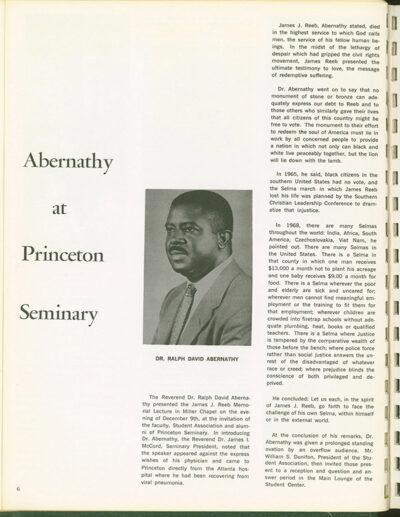
Abernathy helped to mobilize the Freedom Rides in 1961, the Birmingham campaign of 1963, and the marches from Selma in 1965. He was with King at the Lorraine Motel in Memphis when King was shot in the head. Connect to audio of the Abernathy lecture:
After King’s assassination in April 1968, Abernathy became president of the SCLC and continued the Poor People’s Campaign, King’s last project, to call attention to national poverty. That May, near the Lincoln Memorial in Washington, D.C., fifty thousand poor and homeless people built a shantytown and stayed until police forcibly dismantled it one month later. Abernathy was jailed for unlawful assembly for twenty days.
He left the SCLC in 1977 and ran unsuccessfully for Andrew Young’s congressional seat. He then founded the Foundation for Economic Enterprises Development and served as pastor at the West Hunter Street Baptist Church until 1990. He received numerous awards and honorary degrees.
Abernathy faced criticism from other activists in 1980 when he endorsed Republican Ronald Reagan’s presidential campaign and again with the 1989 publishing of his autobiography, which contained references to King’s personal life. He died the following year at the age of 64 of a heart attack.
Holmes writes of King and Abernathy’s rhetorical gifts to “capture the devout yet critical patriotism integral to the civil rights movement,” and of their “undying love for the principles of democracy and unyielding insistence that those principles be truly applied to all.” Miller Chapel was filled beyond capacity for Abernathy’s Reeb lecture, which received a prolonged standing ovation.
We must go on, whether it be on marches and demonstrations and jailings, or in local community work. The only thing that can stop us is our own paralysis of will. I challenge you tonight to break out of that paralysis. I challenge you to join me in creating another Selma, in defying the ominous clouds of confusion and the fainthearted counsel of despair.
The Fifth James Reeb Memorial Lecture – Paul Verghese
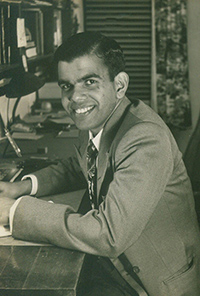
It is not surprising that Paul Verghese’s lecture, “Thoughts on Liberation: James Reeb and Herbert Marcuse,” (audio recording also available) invoked philosopher and social critic Marcuse. Both Verghese and Marcuse drew upon science and technology, religion and philosophy, economics and political models to address societal issues of the 20th century. Verghese carefully avoided oversimplification of Marcuse’s writings as he challenged Marcuse’s utopian concepts with real world crises and a foundational belief that “Utopia is the kingdom of God.” A distinguished Princeton Seminary alumnus and contemporary of Reeb’s, Verghese empathized with aspects of Reeb’s personal faith struggle.
We both looked for a faith that made it possible for us to care for our fellow-man without anxiety or aggression.
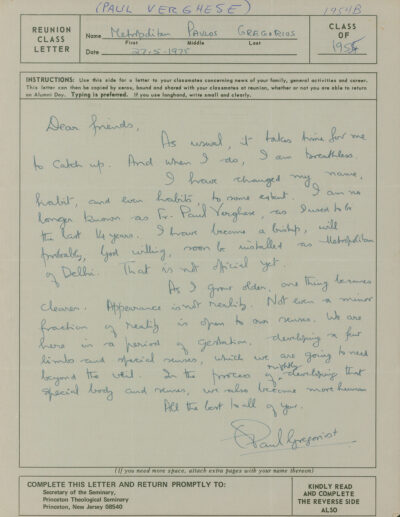
Born in Tripunithura Kerala India August 9, 1922, T. Paul Verghese wrote that he “accepted the Lord as my personal Saviour at the age of 14.” His father was a schoolteacher, and the younger Verghese attended Government High School in Kerala from 1927 to 1937. He worked in journalism and business in India until 1947, becoming an active trade union leader. He then taught public school in Ethiopia from 1947 to 1950 before going to the United States, where he received a bachelor’s degree from Goshen College in Indiana in 1952 and studied at Oklahoma University and Union Theological Seminary in New York. He attended Princeton Theological Seminary, earning a Master of Divinity degree in 1954. He received a Master of Sacred Theology degree from Yale in 1968 and did further studies at Oxford and Muenster. He received his Doctorate in Theology from the Serampore University, West Bengal India, in 1976.
Verghese’s dissertation examined the writings of 4th century philosopher-bishop, Mar Gregorios of Nyssa, in the West Asian Province of Cappodocia, in present-day Turkey. Gregory of Nyssa’s teachings from the Asian-African Christian tradition provided the framework for much of Verghese’s work.
Associate General Secretary of the Student Christian Movement 1954 to 1956, Verghese was General Secretary of the Orthodox Student Movement 1955 to 1957. From 1956 to 1959 he worked as personal staff and advisor to Emperor Haile Selassie in Ethiopia, where he participated in education reform, promoted Indo-Ethiopian diplomatic relations, and lectured at Addis Ababa University. He was ordained to the priesthood in 1961.
Verghese’s General Assembly Letter
Hover over the photo and use the arrows to browse the gallery

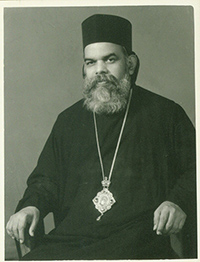
His global ecumenical ministry began in 1962 when he was appointed Associate General Secretary of the World Council of Churches and Director of the Division on Ecumenical Action, becoming the first Orthodox theologian on the WCC staff. He was instrumental in establishing dialogue between the Eastern Orthodox and Oriental Orthodox Churches, and his ministry reflected both his South Asian heritage and inter-religious consciousness.
To be free thus for the Eastern Christian is much more than being liberated. It means becoming spontaneously creative, i.e. to be the originator of the good and the beautiful without being constrained externally or internally to do so.
In 1967 Verghese left the WCC staff to become Principal of the Orthodox Theological Seminary at Kottayam, Kerala. He also established the Sophia Centre.
He represented the Syrian Orthodox Church of Malabar as a delegate to the WCC’s fourth assembly in 1968 at Uppsala and later assemblies up to Canberra in 1991. He was a member of the WCC central and executive committees from 1975 to 1983 and was elected a WCC president from 1983 to 1991. He led WCC delegations to the UN General Assembly Special Sessions on Disarmament in 1983 and 1988. He chaired the 1979 World Conference on Faith, Science and the Future at the Massachusetts Institute of Technology with more than 400 participants, and was vice-president of the Christian Peace Conference from 1970 to 1990.
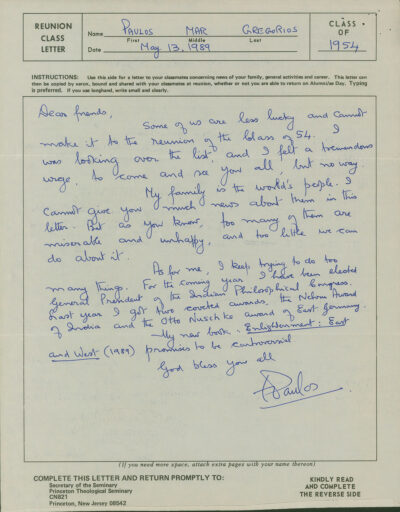
Mar Gregorios was a visiting Professor at Denver, Harvard, Wooster, and Princeton. He was a fellow at the Indian Institute of Advanced Study at Shimla, vice-president of the Kerala philosophical Congress, and president of the Indian Philosophical Congress. Paulos Mar Gregorios received numerous awards and honorary doctorates, including the Distinguished Alumnus Award, Princeton Theological Seminary, May 29, 1992.
He authored more than 100 books and articles and was proficient in several languages, modern and ancient, of Asia, Europe and Africa. An outspoken opponent of apartheid and colonialism, Verghese drew attention to the plight of stonecutters of Tughlakabad, Delhi, and the orphaned boys at Thalakodu, Kerala. He advocated radical social change in opposition to what he saw as racist Western political forces driving global economic development.
Freedom means not simply freedoms from oppression, exploitation and enslavement, but also the capacity to stand up in dignity and to be the free creator of the good.
Reeb Memorial Lecture – Sources
- Abernathy, Ralph. 1989. And the Walls Came Tumbling Down: An Autobiography. New York, N.Y: Harper & Row. https://catalog.ptsem.edu/record=b1153314~S1
- Abrecht, Paul. “In Memoriam: Paulos Mar Gregorios.” The Ecumenical Review, Jan 1997, vol. 49, no. 1, p. 110.
- Crow, Paul A, Jr. “Eugene Carson Blake : apostle of Christian unity.” Ecumenical Review 38, no. 2 (April 1, 1986): 228-236. ATLASerials, Religion Collection, EBSCOhost (accessed February 19, 2015).
- Delhi Orthodox Centre. “Gregory of India: A Profile.” 1996. http://paulosmargregorios.in/profile.html
- De Soysa, Harold. “[Memorial sermon for D T Niles, 1908-1970].” Ecumenical Review 22, no. 4 (October 1, 1970): 434-437. ATLASerials, Religion Collection, EBSCOhost (accessed February 4, 2015).
- Furtado, Christopher L. 1978. The Contribution of Dr. D. T. Niles to the Church Universal and Local. Madras: Christian Literature Society. https://catalog.ptsem.edu/record=b1266778~S1
- Gregorios, Paulos, and K. M. George. 1985. Freedom, love, community: Festschrift in honour of Metropolitan Paulos Mar Mregorios. Madras, India: Christian Literature Society. https://catalog.ptsem.edu/record=b1133533~S1
- Holmes, David G. ““Hear Me Tonight”: Ralph Abernathy and the Sermonic Pedagogy of the Birmingham Mass Meeting.” Rhetoric Review 32, no. 2 (April 2013): 156-173. Literary Reference Center, EBSCOhost (accessed April 20, 2015).
- Howlett, Duncan. 1966. No Greater Love: The James Reeb Story. New York: Harper & Row. https://catalog.ptsem.edu/record=b1588271~S1
- Kyaw Than, U. “D T Niles : some personal reflections.” International Review Of Mission 60, no. 237 (January 1, 1971): 122-124. ATLASerials, Religion Collection, EBSCOhost (accessed February 4, 2015).
- Lacy, Creighton. “The legacy of D T Niles.” International Bulletin Of Missionary Research 8, no. 4 (October 1, 1984): 174-178. ATLASerials, Religion Collection, EBSCOhost (accessed February 19, 2015).
- Moon, Fletcher F. “Abernathy, Ralph David (1926-1990).” Freedom Facts & Firsts: 400 Years Of The African American Civil Rights Experience (January 2009): 289. Points of View Reference Center, EBSCOhost (accessed April 16, 2015).
- Moorhead, James H. 2012. Princeton Seminary in American religion and culture. Grand Rapids, Mich.: W.B. Eerdmans Pub. Co. https://catalog.ptsem.edu/record=b1676665~S1
- NAACP History. “Roy Wilkins.” http://www.naacp.org/pages/naacp-history-Roy-Wilkins Accessed 2015 Feb. 17.
- Niles, D. T. 1948. “Who am I that I should go unto Pharaoh?” WCC Archives Geneva 31.006/26.
- Niles, D. T. 1968. “Behold, I Make All Things New”. WCC Archives Geneva 34.001/1.1.
- Palmowski, Jan. “Wilkins, Roy.” In A Dictionary of Contemporary World History. : Oxford University Press, 2008. http://www.oxfordreference.com/view/10.1093/acref/9780199295678.001.0001/acref-9780199295678-e-2498.
- Princeton Theological Seminary. “The President’s Letter.” Alumni News. Princeton NJ: Princeton Theological Seminary. vol. V, , no. 3, Spring 1965, p. 2. https://commons.ptsem.edu/id/alumninews5141prin
- Princeton Theological Seminary. “ Blake to Open Vocations Conference March 4 with Reeb Memorial Lecture.” Alumni News. Princeton NJ: Princeton Theological Seminary, vol. VI, no. 2, Winter 1966, p. 4-5, 9. https://commons.ptsem.edu/id/alumninews6141prin
- Princeton Theological Seminary. “Statement of Dedication by Lefferts A. Loetscher, ’28.” “McCord Speech, Reeb Memorial Highlight Annual Alumni Day.” Alumni News, Princeton NJ: Princeton Theological Seminary, vol. VI, no. 4. Summer 1966, p. 4, 5. https://commons.ptsem.edu/id/alumninews6141prin
- Princeton Theological Seminary. “Roy Wilkins Lecture to Open Vocations Conference.” Alumni News. Princeton NJ: Princeton Theological Seminary, vol. VII, no. 2, Winter 1967, p. 4, 8. https://commons.ptsem.edu/id/alumninews7141prin
- Princeton Theological Seminary. Alumni News. Princeton NJ: Princeton Theological Seminary, vol. VII, no. 3, Spring 1967, p. 6. https://commons.ptsem.edu/id/alumninews7141prin
- Princeton Theological Seminary. “ Niles, McCord, Johnson to Address Vocations Conference.” Alumni News. Princeton NJ: Princeton Theological Seminary, vol. VIII, no. 2, Winter 1968. p. 4. https://commons.ptsem.edu/id/alumninews8141prin
- Princeton Theological Seminary. “The President’s Letter.” Alumni News. Princeton NJ: Princeton Theological Seminary. vol. VIII, no. 3, Spring 1968. p. 2, 5. https://commons.ptsem.edu/id/alumninews8141prin
- Princeton Theological Seminary. “The President’s Page.” Alumni News. Princeton NJ: Princeton Theological Seminary. vol. IX, no. 4, Summer 1969, p. 2. https://commons.ptsem.edu/id/alumninews9141prin
- Princeton Theological Seminary. “Eugene Carson Blake (1906-1985)”. 1986. The Princeton Seminary Bulletin. p. 79-80, https://commons.ptsem.edu/id/princetonsemina7119prin_0-dmd013
- Visser ‘t Hooft, Willem Adolf. “D T Niles.” International Review Of Mission 60, no. 237 (January 1, 1971): 115-121. ATLASerials, Religion Collection, EBSCOhost (accessed February 27, 2015).
- Wallach, Jennifer Jensen. “Abernathy, Ralph David.” Encyclopedia of African American History, 1896 to the Present: From the Age of Segregation to the Twentyfirst Century, edited by Ed. Paul Finkelman. Oxford African American Studies Center, http://www.oxfordaasc.com/article/opr/t0005/e0026 (accessed Tue Feb 03 11:53:55 EST 2015).
- Weidman, Melinda R.. “Wilkins, Roy O..” Encyclopedia of African American History, 1896 to the Present: From the Age of Segregation to the Twenty-first Century, edited by Ed. Paul Finkelman. Oxford African American Studies Center, http://www.oxfordaasc.com/article/opr/t0005/e1259 (accessed Wed Feb 11 11:06:40 EST 2015).
- Wilkins, Roy, 1901-1981. Roy Wilkins papers, 1901-1980 (bulk 1932-1980). http://lccn.loc.gov/mm81075939
- Wynn, Linda T. “Selma to Montgomery, Alabama, March (1965).” Freedom Facts & Firsts: 400 Years Of The African American Civil Rights Experience (January 2009): 68. Points of View Reference Center, EBSCOhost (accessed February 11, 2015).