C.L. Seow
Henry Snyder Gehman Professor of Old Testament Language and Literature: Celebrating 30+ Years of Scholarship
Hover over the photo and use the arrows to browse the gallery

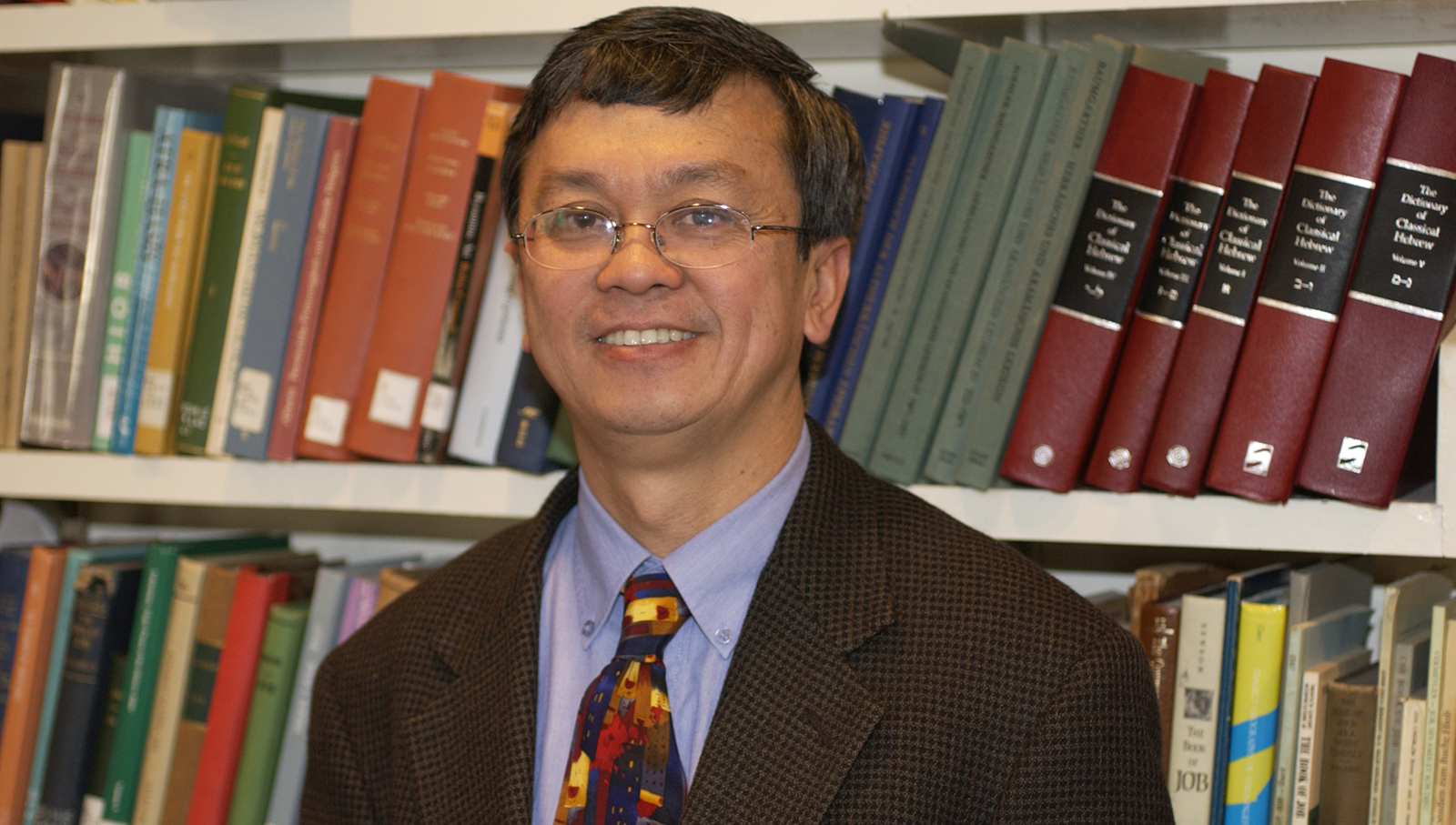
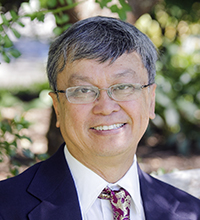
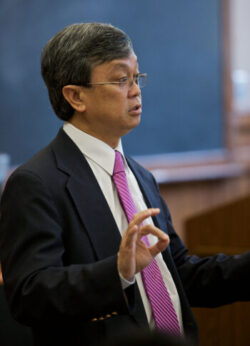
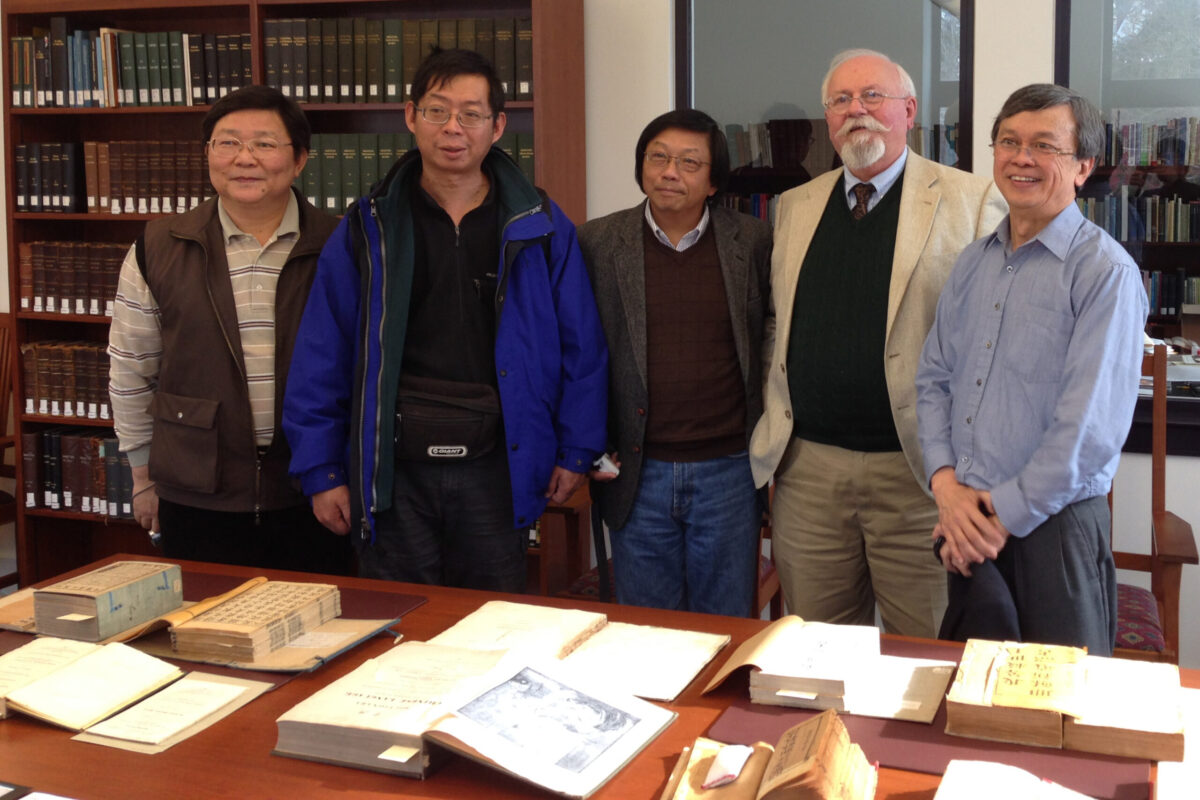
C.L. Seow has taught Old Testament Language and Literature at Princeton Seminary since 1983. Effective August 16, 2015, he joins the faculty of the Divinity School at Vanderbilt University as the Vanderbilt, Buffington, Cupples Distinguished Chair in Hebrew Bible.
The Old Testament Research Colloquium, begun by Professor Seow and Professor Dennis Olson seven years ago, will honor him and his three decades of service to Princeton Seminary at a special session Friday, April 10, 3-5 pm, in the Daniel J. Theron Assembly Room of the Seminary Library.
During the three-part session, colleagues will review selections of Professor Seow’s scholarship, examine how he shaped teaching of biblical Hebrew at the Seminary, and invite him to reflect on his scholarship, past, present, and future as he embarks on the next phase of his career.
The session is open to the entire Seminary Community. Friends and colleagues are also invited to offer greetings and best wishes online here.
About C. L. Seow
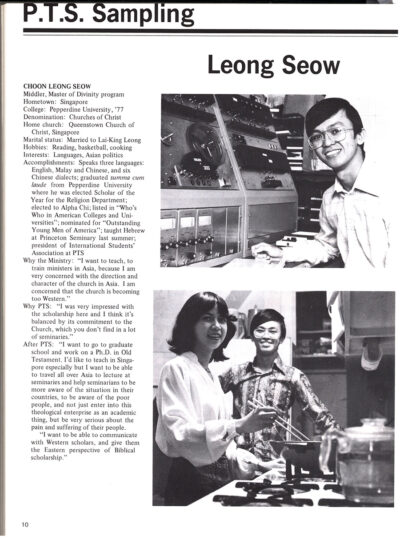
An ethnic-Chinese born and raised in Singapore, Seow Choon Leong (蕭俊良) graduated summa cum laude in 1977 from Pepperdine University, where he was elected Scholar of the Year for the Religion Department. As a student in the Master of Divinity program at Princeton Seminary, he taught Hebrew during the summer and was president of the International Students’ Association. He received the Henry Snyder Gehman Award in Old Testament in 1979 and earned his M.Div. in 1980.
Known as Leong in the West and to family and friends in Singapore, he went from Princeton to Harvard University, where he earned his PhD in Near Eastern Languages and Civilizations. As a student, he dreamed of returning to Asia to teach and sold many of his books to buy reference works he knew would be unavailable in Asia. However, all doors were closed to teaching in Singapore, except for a possible job as a Bible translation consultant.
Professor Seow began his teaching career as a lecturer in Hebrew in the summer program of the Harvard Divinity School before joining the PTS faculty as an instructor in Old Testament in 1983. He became assistant professor of Old Testament at PTS the next year and was promoted to associate professor in 1990. Profiled at that time, he said his primary goal was to enable his students to discover the richness in the original language of Scripture that is so often lost in translation. He hoped to instill in students a love for the Hebrew Bible so it would always speak relevantly to the church.
Ultimately, our purpose is to be theologians, not philologians, but the Church must never lose the ability to lead the text out of its ancient context to the contemporary context.
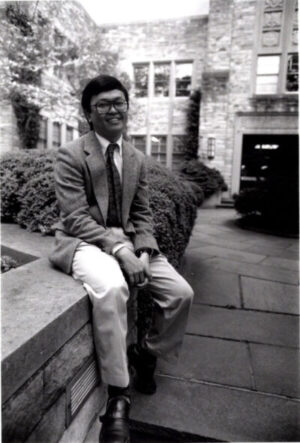
He added that he was especially interested in examining the place of ancient Near Eastern myths and symbols in society:
New data are uncovered daily that shed light on this subject, and it remains for the scholar to piece them together.
In 1995 Professor Seow was named to the newly established Henry Snyder Gehman Chair in Old Testament Language and Literature. He delivered his inaugural lecture, “Socioeconomic Context of ‘The Preacher’s’ Hermeneutic,” April 3, 1996.
He has also taught at Jewish Theological Seminary of America and at institutions in Hong Kong, Singapore, Malaysia, and South Africa. He has been the NEH/ASOR Fellow, W. F. Albright Institute of Archaeological Research in Jerusalem (1986), recipient of the Mitchell Dahood Memorial Prize in Northwest Semitic Philology (1989), Henry Winters Luce III Fellowship in Theology (1997), National Endowment for the Humanity Faculty Research Fellowship (2007), and a member of the Institute of Advanced Study in Princeton (1997).
Professor Seow says his “heart has always remained in Asia,” where he lectures and teaches whenever possible, mentoring students and young colleagues, and helping to build libraries by sending books. He adds that his love of research has brought him to the Princeton Seminary Library countless times to use its full range of resources and teach students how to use them as well.
Professor Seow delivered Princeton Seminary’s opening Convocation address, “The Quiescent Word” 1 Kings 19:1–19; Matthew 8:18–22, for the 2014-2015 academic year Monday, September 8, 2014:
Of his recent work, Job 1-21, C.L. Seow writes,
This book best represents the kind of scholarship I most enjoy and how I see myself contributing to biblical scholarship. … I have had to venture far beyond my ken to do research in the history of Christianity, Jewish Studies, Islamic studies, comparative literature, and art history and music.
Emilie M. Townes, dean of Vanderbilt Divinity School wrote recently of Professor Seow’s new position:
“Professor C.L. Seow is joining the Vanderbilt Divinity School and the Graduate Department of Religion as a Distinguished Professor of Hebrew Bible. His primary teaching responsibilities will be in Hebrew Bible and Jewish Studies – teaching divinity students (MDiv and MTS) and students enrolled in the Graduate Department of Religion (MA and PhD). He will be the senior member of our Hebrew Bible faculty as well as a senior professor in the Divinity School and the GDR as a whole. His position will allow him to build collegial relationships across the University and to enter into collaborative trans-institutional projects with faculty colleagues in the University.”

Portrait of a Philologist
Choon-Leong Seow is the Henry Snyder Gehman Professor of Old Testament Language and Literature at Princeton Theological Seminary, where he has been on faculty for the past thirty-two years. There is a breadth to the scholarship that Leong Seow has produced during his tenure at the Seminary and much of this will be in view at the special session of the Bible Department’s Old Testament Research Colloquium on April 10, entitled “Celebrating Leong Seow,” jointly sponsored by the Library.
At the heart of almost all of Leong’s scholarship, I want to suggest, is philology. Three brief considerations. First, Leong received his doctoral training at Harvard still at the height of the Frank Moore Cross era in a curriculum broadly defined by the canonical dispositions and practices of philology, e.g., historical contextualization, comparison, original language work, and scrutiny of textuality. Two items of importance here: the philological in Leong is not naïve, he was trained to it; and, conversely, it is deeply ingrained in his intellectual DNA—Leong is most authentically a philologist.
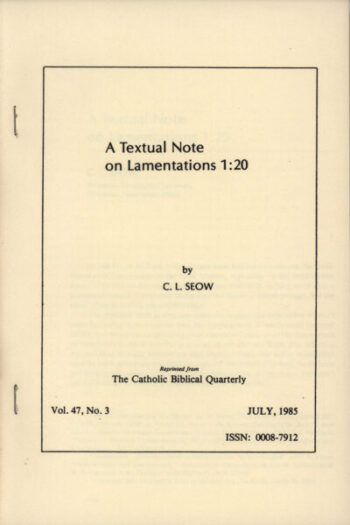
Second, and perhaps most substantially, philology in its manifold practices (“the branch of knowledge that deals with the historical, linguistic, interpretative, and critical aspects of literature,” OED) features in almost every article, essay, dictionary entry, and book Leong has written. Some examples. Textuality has been a long habituated preoccupation of philology and figures prominently in Leong’s work, from his early text critical note on Lam 1:20 throughout his large swath of exegetical studies—one of the remarkable facets of the Job commentary is the depth of attention given to text critical matters, perhaps the freshest and most robust on this most difficult of biblical books since Dhorme. But this philological concern for textuality shows up as well even in less obvious places, for example, in Leong’s decision to feature actual biblical texts in the exercises of a teaching grammar of biblical Hebrew, or in his leveraging of the Bible’s textual diversity as warrant for his “appeal” for the “place of reason and experience” in consideration of the many social issues (here sexuality) “that human beings face” (“A Heterotextual Perspective“).
Original language study is another canonical concern of philology and pervades all of Leong’s writings. Indeed, no matter the explicit subject matter (e.g., literary interpretation, theology, history of religions, sociology) of a piece it is inevitably worked out through an engagement with texts in their original language. Here again the Job commentary epitomizes Leong’s practice. For all of the strong emphasis given to the history of consequences in this volume (e.g., the fronting of the interpretation sections of the commentary), the commitment to the philological elucidation of Job’s language is singular, easily the most original and substantial of all modern commentaries. And one of the more challenging dimensions of Leong’s brand of reception history—what he prefers to call the “history of consequences”—is the way in which he continues to insist on a commitment to original “language” work even as he ventures into areas beyond his (original) expertise, whether that involves gaining the linguistic capacity to read a medieval Jewish commentary or the art historical competence—itself a kind of “language”—to interpret Reformation or early modern art.
I could go on in this vein, looking at other paradigmatic acts of philology (e.g., historical contextualization, comparison) and sighting them at the center of Leong Seow’s scholarly agenda. Instead, however, I want to point to two dimensions of Leong’s recent scholarship, his foregrounding of expressly literary matters (e.g., “An Exquisitely Poetic Introduction to the Psalter”) and the history of reception (e.g., “History of Consequences: The Case of Gregory’s Moralia in Iob”), that while not routinely thought of in terms of classic philology nevertheless are fundamentally philological.
Philology’s customary allergy to literary interpretation since the turn of the twentieth century (in many fields) turns out to be a historical aberration and a stunning consequence of philology’s failure to theorize its own practices and ways of knowing. James Turner’s recent Philology: The Forgotten Origins of the Modern Humanities (2014) reveals the rhetorical-evaluative as one of the originary modalities of philology. And it was none other than Robert Lowth in his Lectures on the Sacred Poetry of the Hebrews (Lat. original, 1753) who was the first in the early modern period to reclaim space for the literary within a philological paradigm of reading. How words mean, for example, will depend as much on the form, style, and the uses to which they are put in the larger literary work in which they are deployed as on etymology and semantics. Leong’s recent work does not only feature acts of literary interpretation itself but insists on the literary as a coefficient of the philological, e.g., whether in arguing about etymology or coming to a text-critical judgment.
As for the history of consequences, I have already noted how the philologist’s commitment to original language work is characteristic of Leong’s research in this area. My hunch is that Leong’s attraction to this dimension of textual study is rooted deeply in his philological soul (or DNA), though he has never been one much given to explicit theorization or meta-reflection. Nevertheless, it is at least of interest that recent theorists, such as Sheldon Pollock (an Indologist), have begun to theorize the history of a tradition’s reception (or reading) of a text specifically as a dimension of philological meaning.
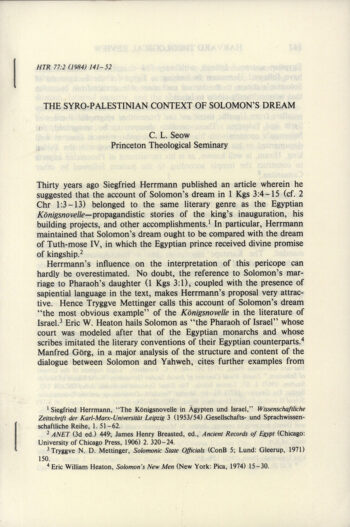
This is Pollock’s “second plane” of philological meaning, which he argues, virtually all philologists exclude from consideration. Not Leong. If not so vigorously named as such it would appear nonetheless that the shift in Leong’s research over the last fifteen years or so to focus more decidedly on the history of consequences may be conceptualized not so much as a new direction but as another dimension of the philological that has long motivated his scholarship. Certainly Pollock’s call for philologists to take seriously the meanings and truths of tradition, to submit them as well to as detailed a historical contextualization as possible, is exemplified in Leong’s recent research (esp. on Job). History of consequences is philology (through and through).
This hyper-attenuated accumulation of specific acts of philology in some of Leong’s published work—a gesture toward the empirical that is itself a valued component in much philological reasoning—may serve as my chief brief for the pervasive place of philology more generally in Leong’s scholarship. These acts also suggest how fundamental the philological is to Leong as a basic modality of thinking. This is the last of my three considerations. Leong not only uses the machinery of philology, as if the latter could be wielded as pure methodology, but he actively reasons through the philological, as a philologist, i.e., as someone who sets about to understand a specific written text (Job, Ecclesiastes, Daniel), for example, by paying close attention to the words of that text, situating the text within its historical context(s), establishing meaning through comparison with other texts, and so on. Philology is a way of knowing—a “branch of knowledge” as the OED puts it—and is crucial to Leong’s operative epistemology.
In the end, of course, neither Leong Seow nor his multivalent scholarly achievements over the last four decades is reducible to any singularity, philology or otherwise. There is a breadth and complex richness to his oeuvre that requires its own accounting. For me for the moment, however, it is enough to appreciate the philological that is at the heart of so much of Leong’s scholarship and that typifies how he comes to know and to think through the texts (biblical, ancient Near Eastern, medieval) he reads.
— F. W. Dobbs-Allsopp
Works Cited
Dhorme, E. Le livre de Job. Paris: V. Lecoffre, 1926.
Lowth, R. Lectures on the Sacred Poetry of the Hebrews. 2 vols. Trans. G. Gregory. London: J.Johnson, 1787. (Lat. original, 1753)
Pollock, S. “Philology in Three Dimensions.” Postmedieval 5/4 (2014): 398-413.
Seow, C. L. “A Note on Lamentations 1:20.” Catholic Biblical Quarterly 102 (1985): 416-19.
Seow, C. L. A Grammar for Biblical Hebrew. Second Edition. Nashville: Abingdon, 1995. First edition, 1987.
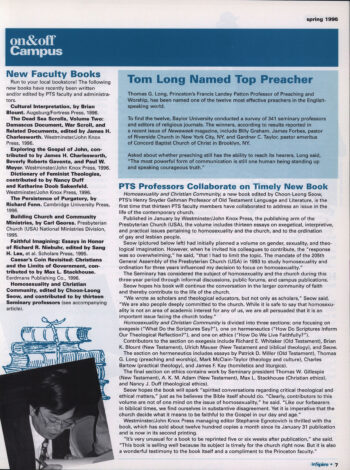
Seow, C. L. “A Heterotextual Perspective.” Pp. 14-27 in Homosexuality and Christian Community. Ed. C. L. Seow. Louisville: Westminster/John Knox, 1996.
Seow, C. L. “History of Consequences: The Case of Gregory’s Moralia in Iob.” Hebrew Bible and Ancient Israel 1 (2012): 368-87.
Seow, C. L. “An Exquisitely Poetic Introduction to the Psalter.” Journal of Biblical Literature 132 (2013): 275-93.
Seow, C. L. Job 1-21. Illuminations. Grand Rapids: Eerdmans, 2013.
Turner, J. Philology: The Forgotten Origins of the Modern Humanities. Princeton: Princeton University, 2014.


C. L. Seow Publications
Book Length Works
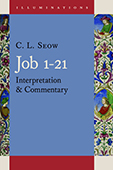
Job 1-21. Illuminations. Grand Rapids: Eerdmans, 2013
The Hebrew book of Job is by all accounts an exquisite piece of literary art that holds its rightful place among the most outstanding compositions in world literature. In elucidating that ancient text, this inaugural Illuminations commentary by C. L. Seow pays close attention to the reception history of Job, including Jewish, Muslim, Christian, and Western secular interpretations.
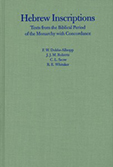
Hebrew Inscriptions: Texts from the Biblical Period of the Monarchy. With F. W. Dobbs-Allsopp, J. J. M. Roberts, R. E. Whitaker. New Haven: Yale University Press, 2004.
This new and up-to-date philological edition of all substantive Hebrew inscriptions from the Iron II (pre-exilic) period takes into account the most current research and presents extensive textual commentary, casting new light on the ancient Israelite language, history, and religion in the monarchic period.
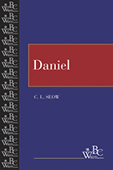
Daniel. Westminster Bible Companion. Louisville: Westminster/John Knox, 2003.
The book of Daniel is concerned with religious persecution. Daniel’s message in this apocalyptic text, however, assures that God will deliver those who trust God, refuse to worship other Gods, and keep Jewish tradition in the face of persecution.
“I & II Kings.” In New Interpreter’s Bible, Volume III. Nashville: Abingdon, 1999. 1-296.
Guided by scholars, pastors, and laity representing diverse traditions, academic experience, and involvement in the Church, this entirely new collection of writings is specifically prepared to meet the needs of preachers, teachers, and all students of the Bible.

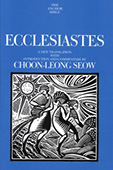
Ecclesiastes: A New Translation with Introduction and Commentary. Anchor Bible 18c. New Haven: Yale University Press, 1997.
Herni Nouwen believes every Christian is a minister trying to live his or her life in light of the gospel. This work is a spiritual guide for every man and woman who wants to come to the aid of others. Includes bibliographical references and indexes.
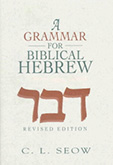
A Grammar for Biblical Hebrew. Second Edition. Nashville: Abingdon, 1995. First edition, 1987.
Key Features: *Uses biblical text from the outset *Greater emphasis on understanding of accents and other critical details; new material on the study of the Hebrew language. Key Benefits: *Helps the student use the biblical text itself *Make use of Hebrew dictionaries and other reference tools easier for the beginning student.
Inaugural Lecture
“The Socioeconomic Context of ‘The Preacher’s’ Hermeneutic” is an inaugural lecture delivered by C.L. Seow on April 3, 1996, upon becoming the Henry Snyder Gehman Professor of Old Testament Language and Literature at Princeton Theological Seminary.
Congratulations
The first time I came across the name C. L. Seow was during my M.Div. days in India when I did preliminary and exegetical courses in Hebrew. I remember being fascinated by his “inductive” approach to learning the language. When I found myself at Princeton Seminary a few years later, it was inspiring to see him in person and get to know him. His students have the highest regard for his scholarship and pedagogy. I recall having conversations with some of my Ph.D. colleagues about how much they use their German and French, and they said, “Well, if you are in Dr. Seow’s classes, you’ll be using a lot of it,” pointing to his academic rigor and expectation. While I knew of his great teaching presence, I more recently also discovered his amazing preaching presence when I heard him at Miller Chapel during the 2014-2015 Opening Convocation. PTS will miss him terribly. It’s great to have celebrated his legacy.
John
Ph.D. Candidate in Religion & Society, PTS
As an advisor, Leong Seow encourages his students to be confident in themselves, while conducting thorough research. He makes them see themselves as colleagues who are joining the community of scholars. The day I met him, I began thinking of my work as a part of a career, rather than studies for a degree. He encouraged me to find my own voice and be unafraid to stand up to any scholar, including himself. While he is known for being a careful and responsible scholar, he pushes me to pursue scholarship in a way that is bold and creative. He is the first to warn that bold claims can only be made by careful scholarship. This blend of bold and responsible scholarship sets him apart as a scholar, and it is what I have learned most from him as a teacher.
Ryan Armstrong
3rd year PhD student, PTS
The course on “Job, Literature and Modernity” that I co-taught with Prof. Leong Seow was among the highlights of my teaching career. Erudite beyond measure, literate and eloquent, Leong is also a master teacher, inspiring the students by challenging them to ask hard questions, and delve deep in their responses. His is truly a collaborative classroom, with students presenting, debating, and daring to take the initiative in probing the most baffling and challenging of texts. It was a privilege to learn from him and teach with him, and I know he will go on to flourish in the next phase of his illustrious career. We will miss him.
Esther Schor
Dept. of English
Princeton University
The 1990s found Americans and American churches hotly engaged in “culture wars,” especially over the issue of Christian teaching regarding homosexuality. At that time, Princeton Seminary was deeply divided, with declarations and counter declarations being drafted by the faculty. Into this setting, Professor Choon-Leong Seow proposed a better way: “Let’s involve faculty colleagues in an academic dialogue on this subject and publish it so as to raise the level of the debate and to assist the church in coming to a common mind.” The result was his edited volume Homosexuality and Christian Community (WJKP, 1996), in which 13 PTS faculty, with a wide range of views, produced thoughtful essays from the standpoint of their disciplines. So successful was this faculty volume that two more followed in quick succession: Women, Gender, and Christian Community (WJKP, 1997), edited by Jane Dempsey Douglas and myself, and involving another 13 faculty colleagues; and Making Room at the Table: An Invitation to Multicultural Worship (WJKP, 2001), edited by Brian Blount and Leonora Tubbs Tisdale, to which another dozen faculty contributed. Significantly, Professor Seow was the only member of the faculty to contribute essays to all three volumes. Prompted by Leong’s leadership, these three volumes anticipated the vision of President Craig Barnes that Princeton Seminary and its faculty are at their best whenever they lead the church in reflection and discussion on difficult public issues. For this legacy, now woven into the Seminary’s self-understanding, we will continue to remain in Leong’s debt.
James F. Kay
Dean and Vice President of Academic Affairs, PTS
Joe R. Engle Professor of Homiletics and Liturgics
Director, Joe R. Engle Institute of Preaching
I am grateful to you, Leong, for so many things–your passionate teaching and inspirational scholarship, your mentoring and wisdom, your warm collegiality, and your considerable generosity. I celebrate and give thanks for your years at Princeton Theological Seminary, and I wish you joy and much success at Vanderbilt. Here’s to you, and welcome to the Bible Belt!
Christine
Christine Roy Yoder
Professor of Old Testament
Columbia Theological Seminary
The acumen of Professor Seow’s academic work testifies to his preeminent place within the disciple of Hebrew Bible/Old Testament. But, even outside of Seow’s brilliant scholarship, the main trait of his personality that confronts anyone who has the pleasure of encountering him in person is his passion. Seow has a love for the things that he studies and teaches more than almost anyone you will ever meet. More importantly, that passion that he brings to his academic study of the Bible spills over into the way that he lives his life–compassionately immersed in a concern for the students here at PTS and deeply motivated by a yearning for peace and justice in the world at large.
Justin Reed
2nd year PhD Student, PTS
Leong,
You have been a wonderful colleague and friend over my 28 years of teaching Old Testament at Princeton Theological Seminary. I am thankful to God for all the many, many ways in which you have contributed to educating and inspiring Masters and PhD students to love the Old Testament in all its richness and diversity. I wish you the very best as you move and share your gifts of teaching and scholarship with a new community in Nashville.
Dennis Olson
Charles T. Haley Professor of Old Testament Theology, PTS
I had the joy of having Dr. Seow as an Mdiv student, years before he became a treasured colleague. How rare it is to have a student (think Dr. Seow) who teaches the teacher every time the student contributes a comment or a paper! And how rare it is that a student (think Dr. Seow) deliberately chooses the most difficult assignment options! How rare it is that a student (think Dr. Seow) is able to teach classmates without intimidating or boring them! Classes in which Dr. Seow was a student remain among the most memorable of my long teaching career.
Katharine Doob Sakenfeld
William Albright Eisenberger Professor of Old Testament Emerita, PTS