World Christianity Conference
Translatability, Transmediality, and Vernacularization in World Christianity
March 2–6, 2027Date & Time
- Tuesday, Mar 2, 2027 - Saturday, Mar 6, 2027
- All Day
Call for Papers
We welcome panel and paper proposals from any discipline on any topic relevant to the conference theme, whether contemporary or historical. While proposals from ethical, theological, and missiological perspectives are welcome, we particularly encourage studies grounded in historical, ethnographic, and other empirical methods.
Proposal Deadline: September 15, 2026
Notification of successful proposals: October 30, 2026
Theme
TRANSLATABILITY, TRANSMEDIALITY, AND VERNACULARIZATION IN WORLD CHRISTIANITY
Eighth International, Interdisciplinary Conference
The eighth World Christianity Conference invites scholars from all interested fields and disciplines to examine the pivotal role of translation in shaping religious traditions. Rather than being a simple act of linguistic transfer, we are proposing a conversation that approaches translation as a dynamic, historically situated practice of mediation, unfolding across languages, media, and semiotic forms. In particular, the conference seeks to examine how translation fundamentally constitutes religious life and structures how traditions understand and express themselves.
Central to this inquiry is the question of how and why translation functions in the reconfiguration of religious practice, and for whom such translational processes are enacted. What happens if translation is not only a means of transmitting a message, but a set of practices that reconfigure the very conditions of religious expression? The conference attends to a wide spectrum of sacred texts in translation, broadly conceived: from oral utterance to written inscription; manuscript to print; paper to digital interface; architectural form to objects of sacred art; and intersemiotic scriptural expressions in which text, image, sound, and gesture converge.
We invite contributions that examine how perceptions and imaginaries of time, persons, objects (including texts and ideas), and languages participate in the production and negotiation of boundaries between traditions, communities, epistemologies, and media ecologies. Translation, in this sense, emerges as a generative site of boundary-making and boundary-crossing, of both differentiation and relationality. The conference explores how the movement—or strategic arrest—of people, texts, sounds, rituals, and material forms reconfigures religious worlds. We are interested in how trajectories of circulation give rise to new epistemic formations and aesthetic practices. Concepts such as translanguaging, vernacularization, trans/inter-mediality, and intersemiotic translation provide productive avenues for rethinking the modalities through which religious expressions are embodied.
We particularly welcome contributions that revisit and critically engage foundational concepts of translation that have shaped the field of World Christianity. Seminal frameworks such as Lamin Sanneh’s theory of vernacularization and Andrew Walls’s “Translation Principle” have profoundly influenced scholarly understandings of how Christianity becomes locally embedded across linguistic and cultural contexts. While these paradigms continue to offer valuable insights into religious encounter, we invite scholars to extend and challenge these conversations in light of new theoretical developments. How might contemporary approaches to translation, mediation, materiality, mobility, and semiotics open new directions for thinking about religious transformation? What conceptual possibilities emerge when translation is examined beyond linguistic transfer? We encourage contributions that carry these foundational discussions into new terrains and help chart future directions for the study of religion and World Christianity.
We welcome papers that explore translation across speech, text, performance, and material culture, and that attend to how these practices reshape networks of exchange, produce forms of religious subjectivity, and structure participation in wider religious publics. Interdisciplinary work drawing on translation studies, religious studies, anthropology, history, literary and media studies, theology, and related fields is especially encouraged.
Some possible topics include, but are not limited to:
- Translation as mediation, transformation, and epistemic practice in religion
- Multilingualism and tranlanguaging in religious communities
- Intersemiotic translation and intermediality in religious texts and practicies
- Vernacularization, mission, and the politics of linguistic hierarchy
- Commentary, exegesis, and translation as co-constitutive practices
- The mobility and materiality of religious texts, objects, and media
- Oral traditions, performance, and the transmedial transmission of religious knowledge
- Digital media and the reconfiguration of sacred textuality
- Language, power, and the ethics of translation
- Mistranslation, opacity, and untranslatability in religious contexts
- Circulation, networks, and global religious exchange
Past Conference Highlights
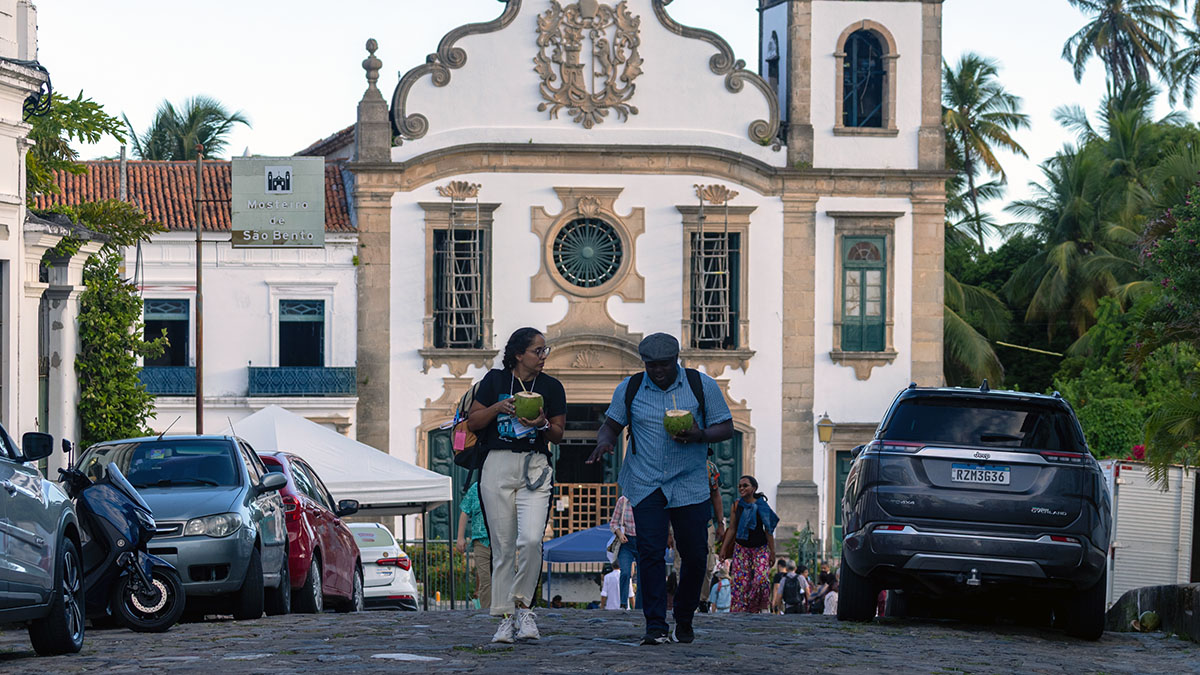
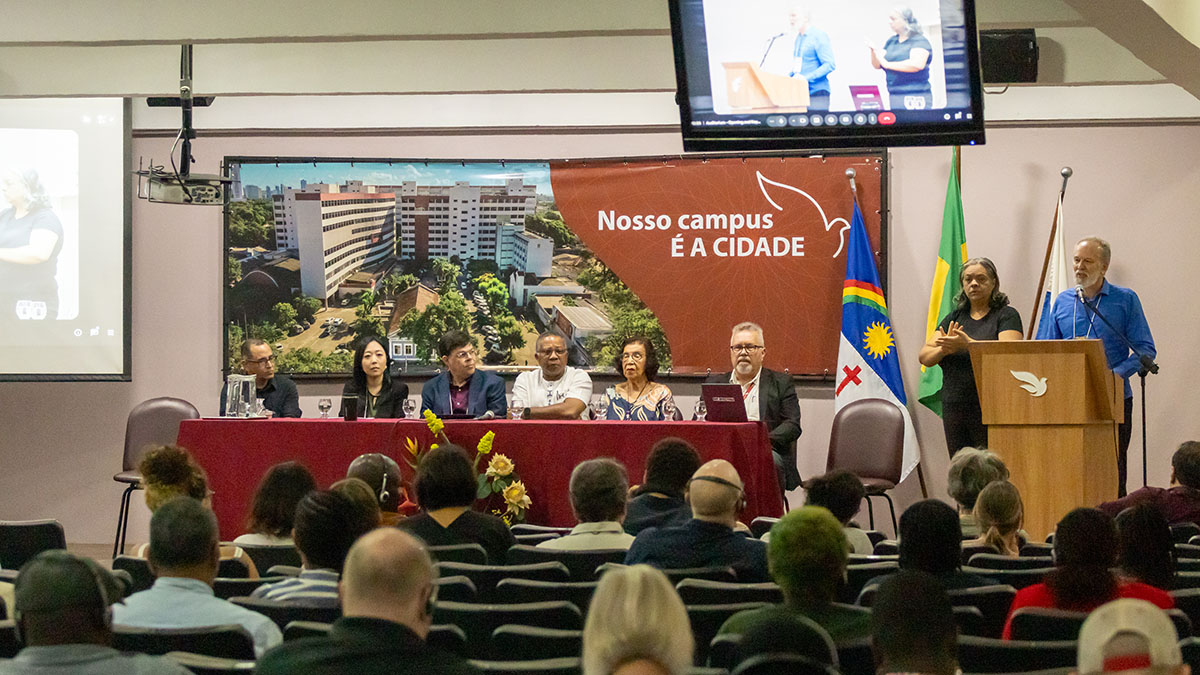
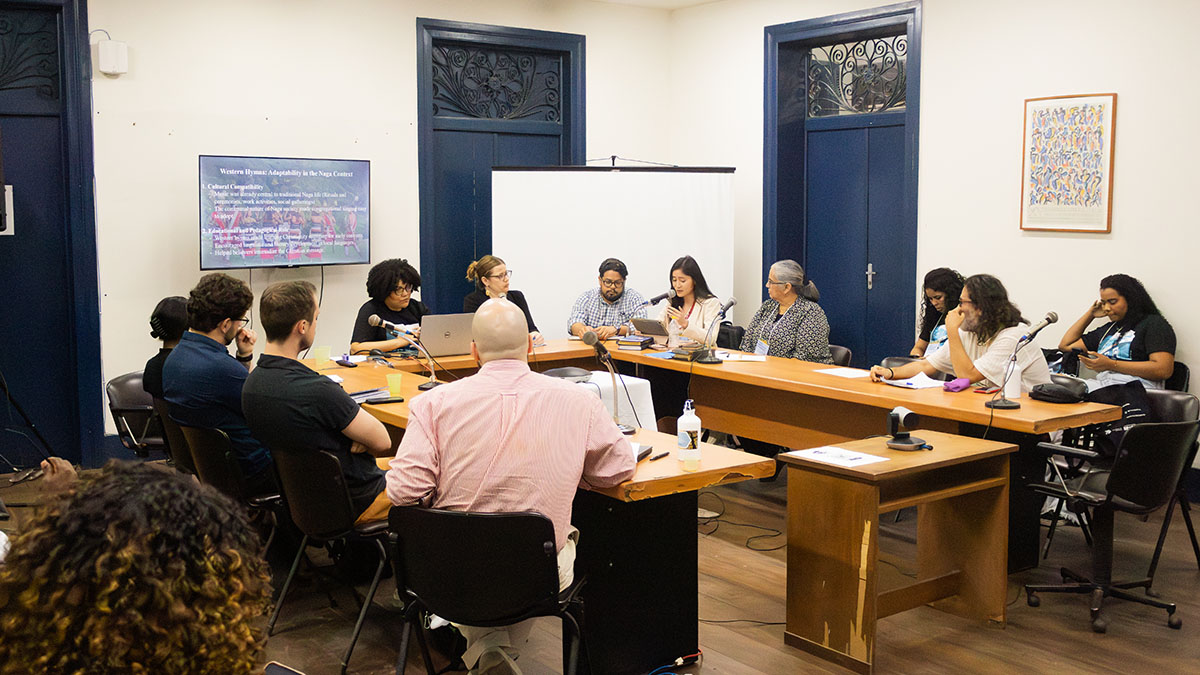
Gerald H. Anderson Lecturers
Each year, the convenors of the PTS World Christianity Conference will invite leading scholars in Mission Studies, World Christianity, Intercultural Theology or a cognate discipline to deliver public lectures at its annual conference. These lectures are named in honor of Gerald H. Anderson.
Open
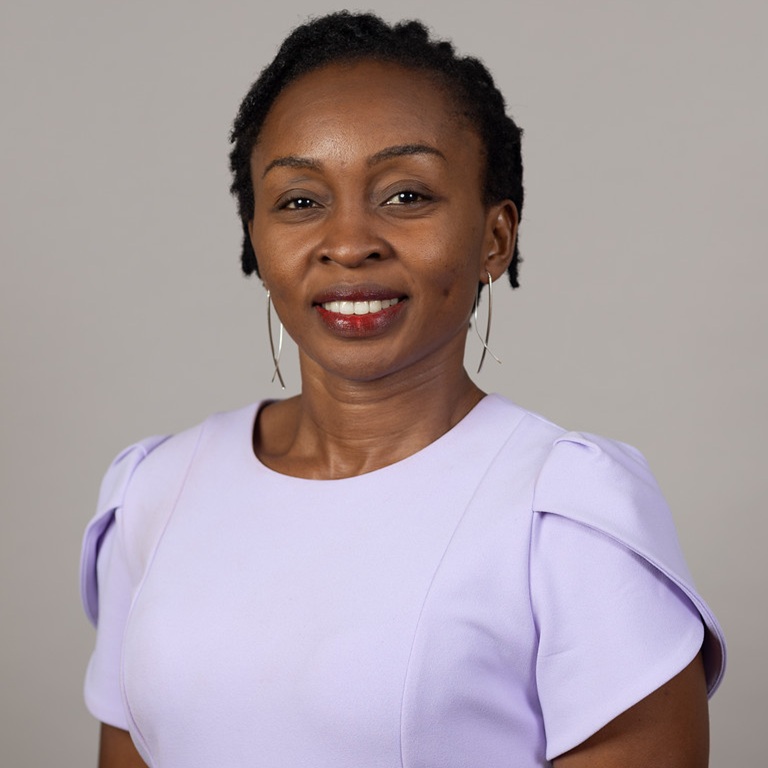
Abimbola A. Adelakun
Abimbola A. Adelakun is an Associate Professor at the University of Chicago Divinity School. Her research interests include studies of Pentecostalism, performance, religion and spirituality in Africa. Her scholarship brings together interdisciplinary research with a sustained interest in the cultural, historical, social, and intellectual questions that shape society’s contemporary society. A central feature of her interdisciplinary approach draws upon performance studies, religious studies, history, and anthropology to examine key questions around religion and its acculturation in society. At the University of Chicago, she teaches courses in Global Christianity, Pentecostalism, performance, religion and spirituality in Africa. She is the author of Powerful Devices: The Politics and Praxis of Spiritual Warfare (Rutgers 2022). She is also the author of Performing Power in Nigeria: Politics, Identity, and Pentecostalism (Cambridge 2021). She is currently a co-editor of Journal of African Cultural Studies and a co-series editor with the Bloombury’s Black Literary and Cultural Expressions. She has also been a research associate with the John Templeton Foundation Religion Trust, working on The Global Megachurch Project. Since 2008, Abimbola has been writing column for PUNCH Newspapers, Nigeria’s most widely-read newspaper. Her popular column critically interrogates the political and social culture.
Open
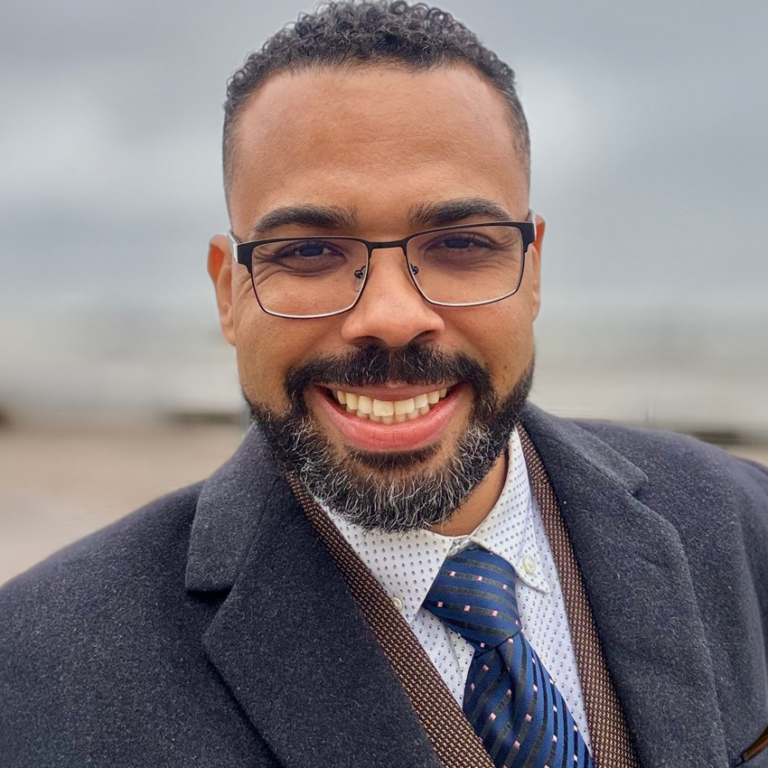
Felipe Fanuel Xavier Rodrigues
Felipe Fanuel Xavier Rodrigues
Felipe Fanuel Xavier Rodrigues is an Assistant Professor of English at the Institute of Letters at Rio de Janeiro State University (UERJ) and a core faculty member in its Graduate Program in Literary Studies. His research examines the intersections of translation, race, gender, and religion in Anglophone and Lusophone Black literatures. He has co-edited several books, including I Rise: Estudos Afro-Americanos Contemporâneos (2025) and the bilingual volume Literaturas, Africanidades e Descolonização / Literatures, African Heritage and Decolonization (2024). He has also published extensively on African American and Afro-Brazilian literatures, Black women’s writing, translation, and Afro-diasporic religions. His work has appeared in WSQ: Women’s Studies Quarterly, the Journal of World Christianity, the Journal of Lusophone Studies, Bakhtiniana, and Absinthe: World Literature in Translation, among other venues. He currently leads a FAPERJ-funded project on the critical English translation of Lélia Gonzalez’s essays. He holds a PhD in Comparative Literature and a BA and teaching degree in English from UERJ, as well as an MA in Religious Studies and a BA in Theology from the Methodist University of São Paulo. He was a CAPES/Fulbright Visiting Scholar and Teaching Assistant at Dartmouth College and a FAPERJ Nota 10 Postdoctoral Fellow at UERJ. A UERJ/FAPERJ Procientista Research Fellow and recipient of FAPERJ’s Young Scientist of Our State award, he chaired the MLA Luso-Brazilian Forum Executive Committee and serves on the Advisory Board of UCL Press’s Literature and Translation series.
Open

Eunsil Son
Eunsil Son
Eunsil Son is Professor in the Department of Religious Studies at Seoul National University, where she teaches Christianity. She holds a Ph.D. and a Th.D. from Paris IV–Sorbonne and the Institut Catholique de Paris, and before joining Seoul National University she taught world church history as Assistant Professor at the Presbyterian University and Theological Seminary. Her research centers on Thomas Aquinas and medieval philosophy and theology, East–West religious encounters, and the reception of Latin scholasticism in East Asia. She is the author of Miséricorde n’est pas défaut de Justice: Savoir humain, révélation évangélique et justice divine chez Thomas d’Aquin (Paris: Cerf, 2018), and her recent work examines the reception of Aquinas in Jesuit missionary texts across early modern China and Japan, as well as ecumenical dialogue between Catholics and Protestants in Korea. She currently serves as President of the Korean Society for Medieval Philosophy.
Registration
Coming Soon!
Schedule
Coming Soon!
Conference Details
Coming Soon!